
Rugby’s origin story begins with a legend, but the sport’s documented history reveals a fascinating evolution from 1823 to today’s global game. While the tale of William Webb Ellis picking up the ball at Rugby School has become iconic, rugby’s true development spans over 200 years of rule changes, splits, and international growth.
- Rugby originated in 1823 at Rugby School, though the William Webb Ellis story is legendary rather than factual
- The sport split in 1895 into rugby union (15 players, amateur) and rugby league (13 players, professional) over payment disputes
- Both codes have grown globally, with union now having 134 member nations and 8 million players worldwide
- Professionalization in 1995 transformed rugby into a major international sport with World Cups and professional leagues
Rugby’s Origins and Early Development: 1823-1871
The William Webb Ellis Legend and Rugby School Origins
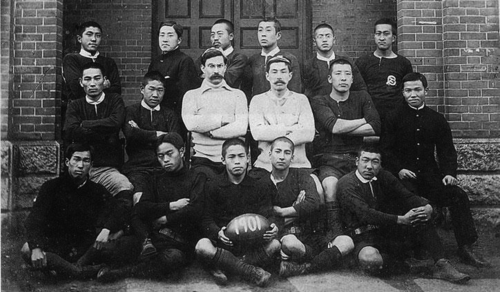
The popular story of rugby’s birth involves William Webb Ellis, a student at Rugby School in England, who allegedly picked up the ball during a football match in 1823 and ran with it. This moment, according to legend, created the distinctive feature of rugby. However, historical evidence suggests this tale is more myth than fact. The story first appeared in 1876, written by an old boy who had learned it from another student, and there’s no contemporary account from 1823. What actually happened at Rugby School was a gradual evolution of football games that allowed handling the ball, with Webb Ellis likely being one of many students who experimented with different ways to play. Rugby School became the crucible where these early forms of football developed, with the school’s playing fields serving as the testing ground for new rules and techniques.
First Written Rules and Rugby Football Union Formation
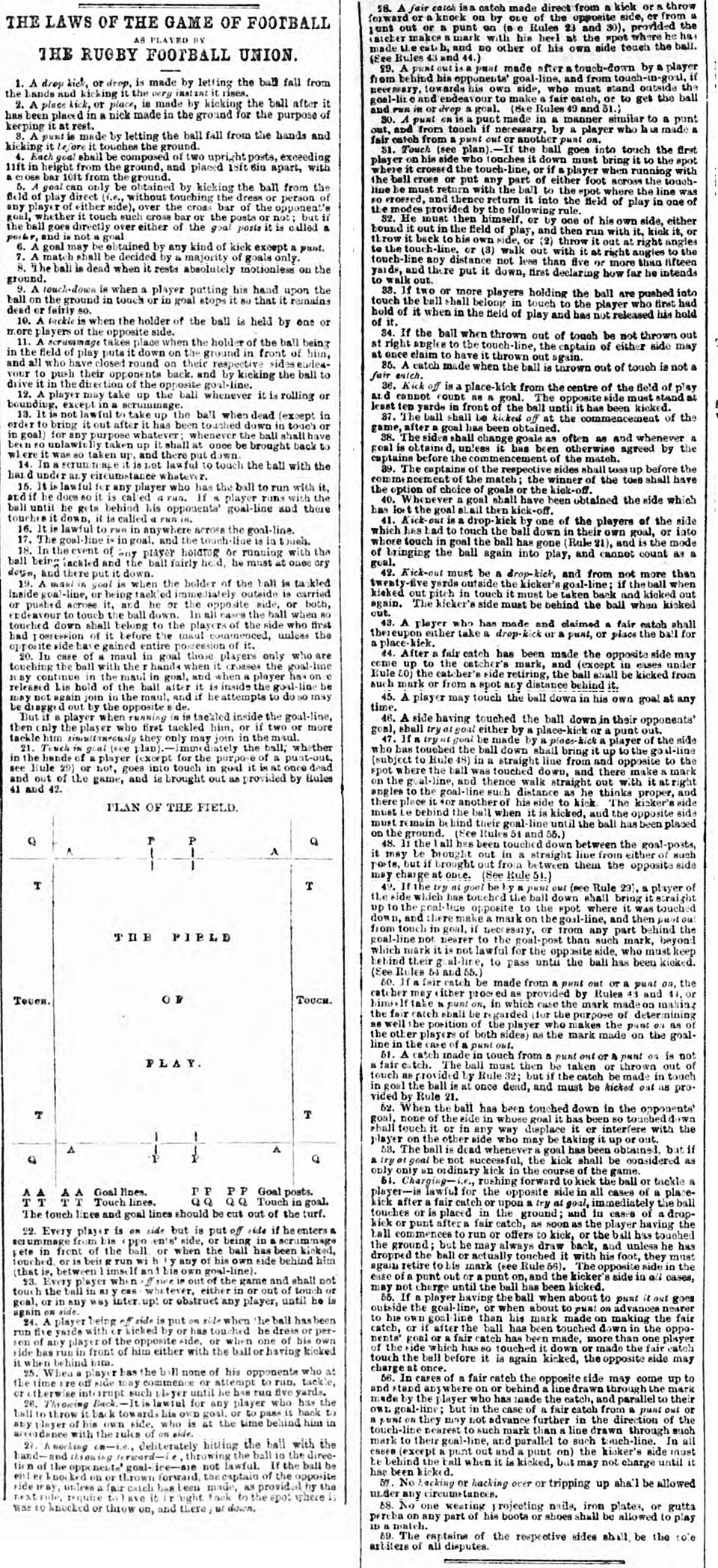
In 1845, Rugby School pupils produced the first written rules for rugby football, creating a standardized framework for the game. These rules established key principles like the offside line, scoring methods, and the basic structure of play. The codification process continued through the 1860s, with different clubs and schools developing their own variations. The critical turning point came in 1871 when the Rugby Football Union (RFU) was formed in London, bringing together clubs from across England to create a unified set of laws. The RFU’s formation marked rugby’s transition from an informal school game to an organized sport with standardized rules. This standardization was crucial for rugby’s spread beyond English schools, as consistent rules allowed the game to be played between different institutions and eventually exported to other countries.
The Great Split and Rule Evolution: 1871-1995
The 1895 Northern Union Split
The most significant event in rugby history occurred in 1895 when 22 northern English clubs broke away from the Rugby Football Union to form the Northern Union, later renamed the Rugby Football League. The split centered on “broken-time” payments – compensation for working-class players who lost wages when taking time off to play rugby. Northern clubs, with their working-class player base, wanted to pay players for lost earnings, while the RFU, dominated by middle and upper-class members, insisted on strict amateurism. The 22 breakaway clubs met at the George Hotel in Huddersfield on August 29, 1895, to form the Northern Union. This split created two distinct codes: rugby union (15 players, amateur) and rugby league (initially 15 players, later 13, professional). The class divide was stark – union became associated with public schools and universities, while league became the sport of industrial working-class communities in northern England.
Key Rule Changes in League and Union
The two codes evolved dramatically different rules after the 1895 split. Rugby league made several changes to create a faster, more entertaining game for paying spectators. In 1906, league reduced teams from 15 to 13 players. The most significant change was the introduction of the “play-the-ball” in the late 1890s, replacing the ruck and maul contests that dominated union. League also introduced the six-tackle rule, limited possession, and simplified scoring. Rugby union retained its 15-player format and traditional set pieces like scrums and lineouts. Union’s rules evolved more gradually, with changes to the offside line, breakdown laws, and scoring values over decades. The table below shows key differences between the codes:
| Feature | Rugby Union | Rugby League |
|---|---|---|
| Players | 15 per side | 13 per side |
| Professional status | Amateur until 1995 | Professional from 1895 |
| Set pieces | Scrums, lineouts | Play-the-ball only |
| Possession | Unlimited phases | Six tackles maximum |
| Scoring (try) | 5 points | 4 points |
Modern Rugby: Professional Era and Global Expansion
Professionalization and World Cup Era
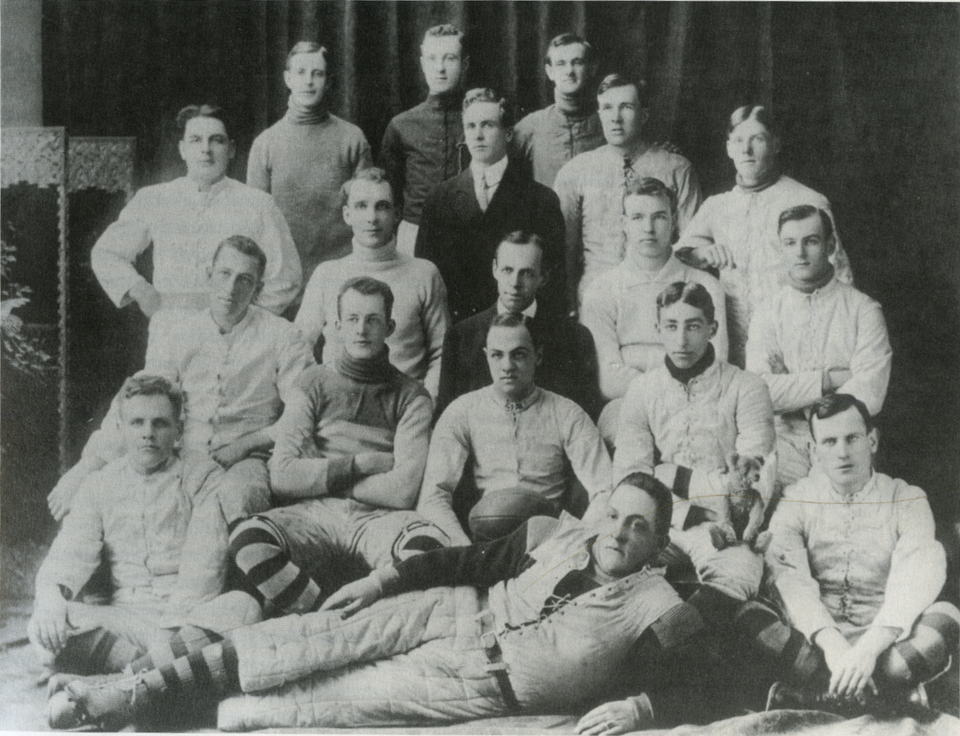
Rugby union’s most transformative change came in 1995 when the sport finally turned professional, 100 years after league had made the same move. This decision followed the 1987 Rugby World Cup, which demonstrated the sport’s global appeal and commercial potential. Professionalization allowed top players to earn a living from rugby, leading to increased training, better facilities, and higher skill levels. The impact was immediate – union’s popularity surged, television rights became valuable, and the sport expanded into new markets. The Rugby World Cup, first held in New Zealand and Australia in 1987 with 16 teams, has grown to become rugby’s premier event. South Africa won the inaugural tournament and has since become one of the sport’s most successful nations, along with New Zealand and Australia. The 1995 World Cup in South Africa, won by the Springboks, became particularly significant as it symbolized the country’s post-apartheid reconciliation.
Current Global Status and Future Growth
Today, rugby union is played in 134 countries with approximately 8 million registered players and 500 million fans worldwide, according to World Rugby. The sport has expanded far beyond its British origins, with strong traditions in countries like France, Argentina, Japan, and Pacific Island nations. Women’s rugby has seen particularly rapid growth, with the Women’s Rugby World Cup gaining prominence since its establishment. The sport continues to evolve – the 2027 Men’s Rugby World Cup in Australia will expand to 24 teams, providing more nations the opportunity to compete at the highest level. World Rugby has also invested heavily in developing rugby in emerging markets, with programs targeting youth participation and infrastructure development. The National Rugby League in Australia has similarly pursued global expansion, with matches played in New Zealand, Fiji, and plans for further international growth. Rugby’s Olympic return in 2016 with the sevens format has further boosted the sport’s global profile and accessibility.
Rugby’s journey from a school legend to a global professional sport demonstrates how a simple game can evolve into a worldwide phenomenon. The 1895 split, while controversial at the time, ultimately helped both codes thrive in different markets and communities. As rugby continues to grow, particularly with the 2027 World Cup expansion, the sport’s future looks as dynamic as its past. For those interested in experiencing rugby’s evolution firsthand, watching the 2027 World Cup matches will showcase how far the game has come since that legendary moment at Rugby School in 1823.
Bangkok Rugby offers a unique perspective on the sport’s modern social aspect, hosting Asia’s biggest social rugby tournament that brings together players from diverse backgrounds. The tournament demonstrates how rugby has evolved from its elite school origins to become a truly inclusive global sport. For more information about rugby rules and how the game is played today, you can explore our comprehensive guide to rugby rules. If you’re interested in the specific roles players take on the field, our rugby positions guide provides detailed information about each position’s responsibilities. You can also learn about rugby training drills to understand how modern players prepare for the demands of the game.
