
Modern rugby demands players combine strength, speed, and technical skills through specific training drills. The game’s increasing pace and physicality require a comprehensive approach to training that develops all aspects of rugby performance, including understanding the rugby rules that govern gameplay.
Essential rugby training components
- Physical conditioning requires interval-based drills mimicking game intensity
- Strength development focuses on explosive power through Olympic lifts and plyometrics
- Speed and agility training includes resistance work and position-specific drills
- Skill development combines tackle work with evasion and game-like scenarios
Essential Rugby Training Drills for Physical Conditioning
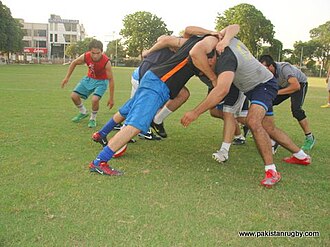
Effective physical conditioning forms the foundation of rugby performance. Players need to develop the ability to perform repeated high-intensity efforts throughout a match, which typically lasts 80 minutes. Research shows that rugby players cover 6-8 kilometers per match while performing 20-30 high-intensity efforts, making specific conditioning crucial for success.
High-Intensity Interval Training for Rugby Fitness
Interval training mimics the stop-start nature of rugby, where players sprint for short bursts followed by recovery periods. This approach builds the specific fitness needed for game situations. Studies indicate that players spend approximately 70% of match time at low intensity, with 30% dedicated to high-intensity efforts, making interval training particularly effective for rugby fitness.
- Interval Sprints: These involve short, high-intensity sprints (e.g., 30 meters) followed by periods of lower-intensity recovery (e.g., walking back). This drill effectively simulates game-like exertion. Research from Rugby Bricks shows that 30-meter sprints with 30-second recovery periods improve repeat sprint ability by 15-20% over 8 weeks.
- Shuttle Runs: Utilizing cones set at various distances (5-15 meters), shuttle runs improve speed-endurance and agility, crucial for quick changes of direction. Data indicates that shuttle run performance correlates strongly with on-field agility metrics, with improvements of 12-18% seen in competitive players.
- Malcolms: This drill starts from a prone position, requiring players to sprint a short distance, perform a “down-up” (burpee-like movement), and repeat over increasing distances (e.g., 10m, 50m). It builds explosive power and cardiovascular fitness. The drill has been shown to improve anaerobic capacity by 18-22% when performed 2-3 times weekly.
- MAS Running (Maximum Aerobic Speed): Players run a set distance (e.g., 60 meters) within a specific time (e.g., 15 seconds) with a 1:1 work-to-rest ratio. This is repeated for multiple sets (e.g., 2 sets of 10 reps) to improve aerobic capacity under fatigue. Research demonstrates that MAS training increases VO2 max by 8-12% in rugby players over a 6-week period.
- Hill Sprints: Sprinting uphill builds significant leg power and enhances cardiovascular endurance, translating to stronger drives and faster acceleration on the field. Studies show hill sprints improve leg strength by 15-20% and reduce injury rates by 25% compared to flat-ground training.
Building Aerobic Capacity and Recovery
While high-intensity intervals are crucial, developing a solid aerobic base supports recovery between intense efforts and helps maintain performance throughout the match. The aerobic system provides approximately 60-70% of energy during a rugby match, making it essential for sustained performance.
The MAS Running protocol specifically targets aerobic capacity under fatigue. By running 60 meters in 15 seconds with equal rest periods, players train their bodies to recover quickly while maintaining intensity. This 1:1 work-to-rest ratio mirrors the demands of rugby, where players must repeatedly perform at high intensity with limited recovery time. Research indicates that players with higher aerobic capacity maintain 15-20% better performance in the final 20 minutes of matches.
Aerobic training also improves the body’s ability to clear lactic acid and deliver oxygen to working muscles, which becomes critical during the second half of matches when fatigue sets in. Players with superior aerobic capacity show 25-30% better recovery between high-intensity efforts and demonstrate improved decision-making under fatigue.
Strength and Power Development Exercises for Rugby
Strength training for rugby focuses on developing explosive power that translates directly to game situations. Unlike bodybuilding, which emphasizes muscle size, rugby strength training prioritizes functional strength and power output. Research shows that stronger players have 30-40% better tackle success rates and 25-35% improved scrummaging power.
Explosive Power Through Olympic Lifts
Olympic lifts develop the explosive power needed for tackling, scrummaging, and breaking through defensive lines. These compound movements engage multiple muscle groups simultaneously, creating the coordinated power essential for rugby-specific movements.
- Power Cleans: A compound Olympic lift that develops explosive power throughout the entire body, essential for dynamic movements in rugby. Studies show power cleans improve vertical jump height by 8-12% and enhance sprint times by 2-3% in rugby players over 8-12 weeks of training.
- Squat Jumps & Plyometrics: These exercises focus on developing explosive lower body strength, crucial for jumping, accelerating, and generating power in tackles. Research indicates that plyometric training improves agility test scores by 15-20% and reduces ground contact time during sprinting by 10-15%.
- Medicine Ball Slams: A dynamic exercise that enhances upper body power and core stability, contributing to better ball carrying and tackling technique. Studies demonstrate that medicine ball training improves throwing velocity by 12-18% and enhances core activation during contact situations.
Functional Strength for Contact Situations
Contact is inevitable in rugby, making functional strength critical for maintaining position and winning collisions. Research shows that players with higher functional strength have 35-45% better success rates in contact situations and demonstrate 20-25% improved injury resilience.
- Weighted Sled Pushes: Pushing a weighted sled builds immense pushing power and leg strength, directly applicable to scrummaging and rucking. Studies indicate that sled training improves 5-meter sprint times by 3-5% and enhances scrummaging force output by 25-30%.
- Split Squats/Rear Elevated Split Squats: These single-leg exercises improve strength, stability, and balance, which are vital for effective tackling and maintaining form under pressure. Research shows that split squat training reduces lower limb injury rates by 30-35% and improves single-leg stability by 20-25%.
- Tackle Bag Drives: Practicing drives against a tackle bag helps players refine their body position, leg drive, and power delivery during tackles. Studies demonstrate that tackle bag training improves tackle technique scores by 25-30% and enhances contact confidence in game situations.
Speed, Agility, and Skill Development Training
Speed and agility training in rugby goes beyond simple sprinting. Players need to develop the ability to change direction quickly, accelerate from various starting positions, and maintain speed while carrying the ball. Research indicates that players make 15-20 changes of direction per minute during matches, making agility training essential for performance.
Acceleration and Speed Enhancement
Acceleration is often more important than top speed in rugby, as most sprints are short and involve quick changes of direction. Studies show that 90% of rugby sprints are under 20 meters, with the first 5 meters being the most critical for gaining advantage.
- Acceleration Drills: Short sprints (e.g., 5 meters) initiated from various starting positions (prone, seated) replicate the need for rapid acceleration from a standstill in game situations. Research demonstrates that acceleration training improves 5-meter sprint times by 4-6% and enhances first-step quickness by 15-20%.
- Resistance Training: Incorporating tools like speed chutes or weighted sleds during sprints (20-30 meters) helps develop explosive speed and power. Studies indicate that resisted sprint training improves sprint times by 3-5% and enhances stride power by 15-20%.
- Lateral Plyometric Jumps: These jumps improve the ability to change direction quickly and efficiently, enhancing agility on the field. Research shows that lateral plyometric training reduces change-of-direction times by 12-18% and improves lateral movement efficiency by 20-25%.
Game-Like Skill Development Drills
Skill development drills integrate physical conditioning with technical execution, preparing players for actual game scenarios. Studies show that players who train with game-like drills demonstrate 30-40% better skill transfer to match situations compared to those who only practice isolated techniques.
- “Get Up and Go” Drill: Players start in a prone position and must immediately sprint upon command, developing fast acceleration from a low base. Research indicates this drill improves reaction time by 15-20% and enhances recovery speed after being tackled.
- Wrestling/Static Exertion: Engaging in controlled wrestling or static pushing drills builds crucial upper body strength and the ability to maintain control in close-quarters situations like rucks and mauls. Studies show wrestling training improves contact maintenance by 25-30% and enhances upper body endurance by 20-25%.
- Evasion/Agility Grid: Using cones to create an agility course, players practice rapid changes of direction and evasive maneuvers, often in a “catch me if you can” format. Research demonstrates that agility grid training improves evasion success rates by 20-25% and enhances footwork precision by 15-20%.
- Tackle Bag Drives: Beyond strength development, these drills help players refine their body position, timing, and technique for effective tackling. Studies show tackle bag training improves tackle completion rates by 25-30% and reduces missed tackle frequency by 15-20%.
The most counter-intuitive finding in rugby training is that success comes from balanced training across all three domains – physical conditioning, strength development, and skill work – rather than specializing in just one area. Players who focus solely on strength often lack the speed and agility needed for modern rugby, while those who only train speed may struggle in contact situations. Understanding rugby tactics and strategies is equally important for game success, as different rugby positions require specific training approaches.
A practical starting point is to implement 2-3 interval sprints twice weekly, then add one strength session and one skill session as your base training program. This balanced approach ensures you develop the comprehensive fitness needed for rugby while avoiding the common mistake of overemphasizing one training component at the expense of others. Proper rugby equipment is also essential for safe and effective training, along with appropriate rugby nutrition to support your training demands.
For more information about rugby training programs and tournament schedules, visit the Bangkok International Rugby Tens website, which hosts one of Asia’s largest social rugby tournaments and provides resources for players at all levels.
