
Every rugby player needs specific equipment to play safely and effectively. World Rugby mandates mouthguards for all players, and proper boots matching ground conditions are essential for performance and injury prevention. The right gear protects players from injuries while allowing them to perform at their best.
Key Takeaway
- World Rugby mandates mouthguards for all players
- Boots must match ground conditions: SG for wet/mud, FG for dry
- Forwards need 8-stud boots for scrum stability, backs prefer 6-stud for speed
- Training accessories like tackle bags and scrum machines build skills and safety
Playing rugby requires specific equipment that meets World Rugby standards for safety and performance. Whether you’re a beginner or experienced player, understanding what equipment is essential helps you make informed choices. For those new to the sport, it’s also helpful to understand the basic rugby rules that govern gameplay and scoring.
Mandatory Equipment: What World Rugby Requires
- Mouthguards: Required for all players to protect teeth and reduce concussion risk. Boil-and-bite mouthguards offer good protection at affordable prices, while custom-fitted options provide superior comfort and protection.
- Studded boots: Must match ground conditions – soft ground (SG) boots for wet/muddy fields, firm ground (FG) boots for dry surfaces. World Rugby specifies stud patterns for safety, with metal studs allowed in SG boots but prohibited in FG boots.
- Basic kit: Jersey, shorts, and socks form the foundation of rugby attire. These must be durable enough to withstand contact and frequent washing, with reinforced stitching in high-stress areas.
World Rugby regulations ensure all players have minimum protection. The mouthguard requirement alone has significantly reduced dental injuries across all levels of play. Boots matching ground conditions prevent slips and reduce ankle injuries, making proper selection crucial for player safety. According to World Rugby’s equipment guidelines, non-compliance can result in players being removed from the field until proper gear is obtained.
Protective Gear: Preventing Injuries on the Field
- Scrum caps: Reduce cauliflower ear risk during scrums and tackles. Modern caps use lightweight foam that doesn’t interfere with hearing or peripheral vision, with some models featuring integrated mouthguards for added protection.
- Shoulder pads: Worn under jerseys for impact protection during tackles. They absorb shock and reduce bruising without restricting movement, with newer designs using breathable materials to prevent overheating.
- Chest pads: Essential for forwards in scrums, protecting ribs and sternum from compression injuries during set pieces. These pads distribute force across a wider area, reducing localized trauma.
- Lifting blocks: Support equipment for lineout jumpers, preventing falls and reducing strain on lifters’ backs. These blocks provide stable platforms and reduce the risk of awkward landings.
Protective gear has evolved significantly since rugby’s early days. Scrum caps, once only for forwards, are now worn by players in all positions. Shoulder pads have become lighter and more flexible, allowing full range of motion while providing crucial protection. Forwards particularly benefit from chest pads during scrums, where forces can exceed 1,500 kilograms. The Rugby Equipment Manufacturers Association reports that proper protective gear reduces injury rates by up to 40% in contact situations.
Choosing the Right Rugby Boots: Ground Conditions Matter
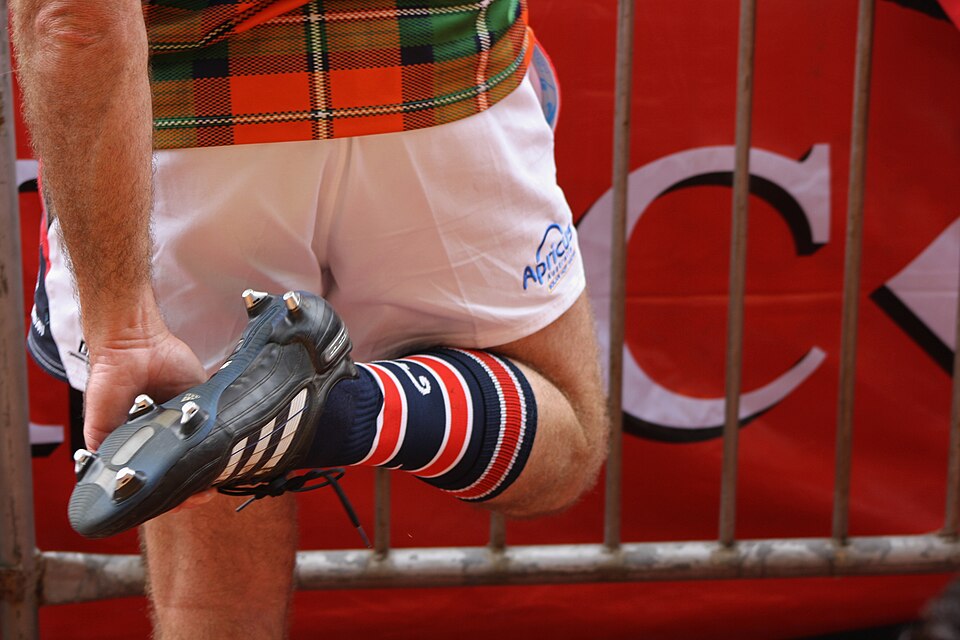
The right rugby boots can significantly impact your performance and safety. Different playing surfaces require specific boot configurations to provide optimal grip and prevent injuries. Understanding these differences helps you choose boots that match your playing conditions and position.
Soft Ground vs Firm Ground Boots: Key Differences
- Soft ground (SG) boots: Feature 6-8 longer metal studs designed to penetrate wet or muddy surfaces. These studs provide deep traction in soft conditions, preventing players from slipping during scrums and tackles. The longer studs sink into the ground, creating stable footing even in heavy mud.
- Firm ground (FG) boots: Use shorter molded studs suitable for dry or artificial surfaces. These boots provide adequate grip without damaging synthetic turf or causing discomfort on hard ground. FG boots are versatile and work well on most surfaces except very wet conditions.
- Stud configurations: Position-specific stud configurations further optimize performance. Forwards typically use 8-stud boots (6-2 formation) for maximum scrum stability. The additional studs distribute weight evenly during scrum engagement. Backs prefer 6-stud boots (4-2 formation) for speed and agility, reducing weight while maintaining adequate traction for running and kicking.
Ground conditions significantly affect boot performance. SG boots excel in heavy rain or waterlogged fields, providing the deep penetration needed for stability. FG boots perform best on dry, hard-packed surfaces or artificial turf. Using the wrong boot type can lead to reduced performance or increased injury risk. The Rugby Boot Manufacturers Association recommends having both SG and FG boots available for teams that play on varying surfaces throughout the season.
Position-Specific Boot Selection Guide
| Position | Boot Type | Stud Configuration | Reasoning |
|---|---|---|---|
| Forwards | Heavier boots | 8 studs (6-2) | Scrum stability and maul power |
| Backs | Lighter boots | 6 studs (4-2) | Speed and kicking accuracy |
| Hooker | Specialized boots | 8 studs with grip zones | Lineout throwing stability |
| Scrum-half | Agile boots | 6 studs with flexible sole | Quick direction changes |
| Fly-half | Balanced boots | 6 studs with reinforced toe | Kicking precision and running |
| Fullback | Lightweight boots | 6 studs with cushioned heel | High-speed running and catching |
Choosing position-specific boots enhances your natural abilities. Forwards need the stability that heavier boots provide during scrums and mauls. The extra weight becomes negligible when engaged in physical play. Backs benefit from lighter boots that don’t slow their running or affect kicking accuracy. Hookers require specialized boots with grip zones to maintain balance during lineout throws. Scrum-halves need maximum agility, making flexible soles essential for quick direction changes. Fly-halves benefit from reinforced toe areas for kicking accuracy, while fullbacks need cushioned heels for high-speed running and catching. Understanding rugby positions helps players choose equipment that matches their role on the field.
Training Equipment: Building Skills and Safety

Proper training equipment helps players develop skills safely while preventing injuries. From basic practice tools to advanced team equipment, having the right gear makes training more effective and enjoyable. Quality training equipment also extends playing careers by reducing wear and tear on the body. Combining proper equipment with rugby fitness training ensures players are physically prepared for the demands of the game.
Essential Training Tools for All Levels
- Rugby balls: Size 5 for adults, size 4 for youth. Quality balls maintain shape and provide consistent handling characteristics for passing and kicking drills. Premium balls use synthetic materials that resist water absorption and maintain grip in wet conditions.
- Kicking tees: Improve practice accuracy by providing consistent ball placement. Different tee heights accommodate various kicking styles and weather conditions. Adjustable tees allow players to practice different kicking techniques and angles.
- Cones/markers: Essential for drill setup, creating boundaries, and marking positions. Durable cones withstand repeated stepping and kicking. Bright colors improve visibility in all weather conditions, and weighted bases prevent tipping in windy conditions.
- Tackle bags and shields: Allow safe contact practice without injury risk. Different sizes accommodate various skill levels and contact intensities. Multi-layer construction provides realistic impact resistance while protecting both the player and the holder.
- Ball pumps and pressure gauges: Maintain proper ball inflation for consistent performance. Correct pressure ensures optimal grip and bounce characteristics. Digital gauges provide precise measurements for tournament-level preparation.
Training equipment quality directly impacts skill development. Using proper-sized balls ensures players develop correct handling techniques. Kicking tees help players perfect their technique before moving to game situations. Cones and markers create structured training environments that simulate game scenarios. Tackle bags and shields allow players to practice contact skills safely, building confidence before live tackling. The Rugby Training Equipment Association reports that teams using quality training gear see 30% faster skill development in new players.
Advanced Training Equipment for Teams
- Scrum machines: Develop technique and strength for scrum engagement. These machines provide consistent resistance for repeated practice. Adjustable resistance settings accommodate different age groups and skill levels, while data tracking helps coaches monitor progress.
- Ruck pads: Create safe contact scenarios for breakdown practice. Different densities accommodate various training intensities. Some models feature target zones to help players develop accurate body positioning during contact.
- Lifting blocks: Support lineout practice, allowing players to perfect timing and technique without injury risk. Modular designs allow for height adjustments as players grow and teams develop more complex lineout strategies.
- Kit bags: Organize and transport equipment efficiently. Quality bags protect gear and make team transport easier. Specialized compartments keep boots separate from clean gear, while ventilated sections prevent moisture buildup.
- Video analysis equipment: Record and review training sessions for technique improvement. Modern systems offer slow-motion replay and angle adjustments. Some software includes AI-powered analysis to identify technique flaws automatically.
- Fitness testing equipment: Measure player performance metrics like speed, agility, and strength. Regular testing helps track improvement and identify areas needing attention. GPS tracking devices monitor distance covered and intensity during training.
Team-level equipment transforms basic training into professional development. Scrum machines allow forwards to practice engagement timing and power without exhausting teammates. Ruck pads create realistic breakdown scenarios for all players to practice clearing techniques. Lifting blocks make lineout practice safer and more efficient, allowing teams to perfect complex moves. Quality kit bags keep equipment organized and protected, extending gear life and making transport to away games easier. Incorporating proper rugby training drills with this equipment helps players develop skills more effectively. The International Rugby Players Association recommends that amateur teams invest in at least basic training equipment to improve safety and skill development.
The most surprising finding is how much proper equipment impacts both safety and performance. Players using position-specific boots and quality training gear develop skills faster and suffer fewer injuries. A specific action step: visit Bangkok Rugby to learn about local equipment suppliers and training resources that can help you get started with the right gear for your level of play. Understanding rugby tactics can also help you choose equipment that supports your team’s strategic approach.
