
Most rugby coaches waste 40% of training time on ineffective drills that don’t transfer to game situations. The difference between good and great coaching isn’t knowledge—it’s how you structure your sessions to develop core skills under realistic pressure.
- Effective rugby coaching focuses on five core skills: running, passing, tackling, contact, and decision-making
- Structure sessions using the 15-20-15-15 minute framework for maximum skill development
- Apply PEAS principles (Purposeful, Enjoyable, Active, Safe) to every training activity
- Use small-sided games to increase repetitions and decision-making opportunities
- Progress from isolated drills to game pressure for better skill transfer
Core Skills Every Rugby Player Must Master
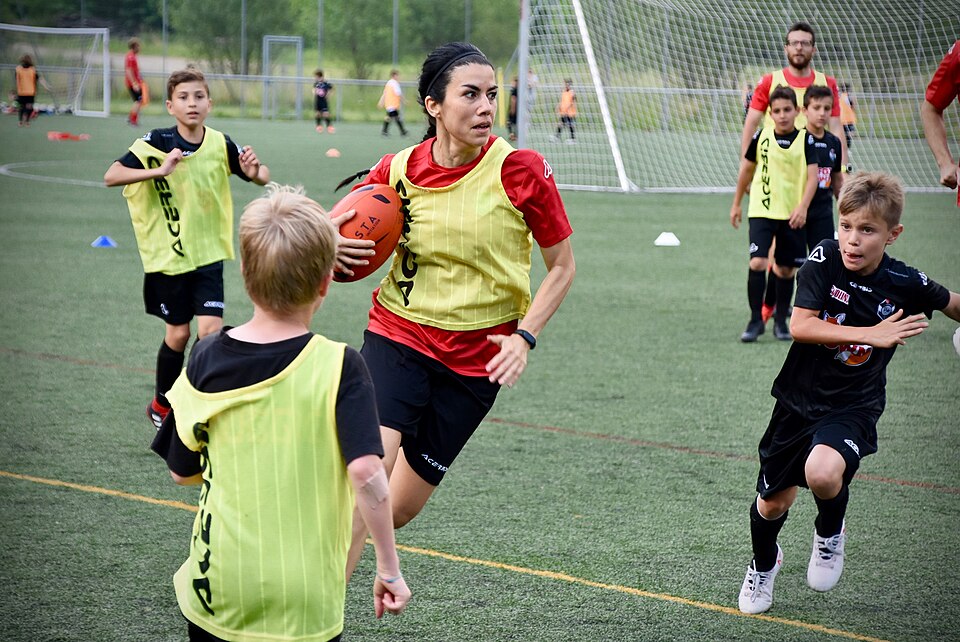
The Five Essential Skills All Players Need
Every successful rugby player must master five fundamental skills that form the foundation of the game. These core competencies apply to all positions, from forwards to backs, and determine how effectively players perform under match conditions.
Running forms the basis of rugby movement. Players need explosive acceleration to break through defensive lines and the ability to change direction quickly to evade tacklers. Effective running also includes maintaining balance while carrying the ball and knowing when to pass versus when to continue running. Different rugby positions require specialized running techniques and endurance levels.
Passing and catching skills are critical for maintaining possession and creating attacking opportunities. Players must master both spin passes for long-distance distribution and pop passes for quick, short transfers. Catching under pressure, whether from a kick or a pass, requires hand-eye coordination and the confidence to secure the ball in contact situations.
Tackling is the defensive cornerstone that stops opposition attacks. Players need to execute front-on tackles for direct confrontations, side tackles for ball carriers moving laterally, and rear tackles for players trying to break away. Proper tackling technique prevents injuries while maximizing the chance of winning the ball back. Understanding rugby rules regarding legal tackles is essential for safe and effective defensive play.
Contact and breakdown skills determine who wins possession after tackles occur. Players must understand body positioning, support roles, and the timing of entering rucks and mauls. These micro-skills often decide the outcome of close matches where possession is fiercely contested.
Decision-making separates good players from great ones. Players must constantly assess game situations, choose between passing, running, or kicking options, and adapt their choices based on defensive pressure and field position. This cognitive skill improves through repetition and game-like scenarios.
Progressing from Drills to Game Pressure
Skill development follows a natural progression that mirrors actual game conditions. Coaches who understand this progression create more effective training environments that produce better match performance.
Isolated skill development forms the starting point. Players practice individual techniques without opposition pressure, focusing on proper form and execution. This might include basic passing drills, tackling bags, or footwork exercises. The goal is building muscle memory and confidence with fundamental movements.
Small-sided games introduce controlled opposition while maintaining high repetition rates. These modified games reduce field size and player numbers, creating more frequent decision-making opportunities. For example, a 3v2 drill forces attacking players to make quick passing decisions while defenders practice positioning and timing.
Conditioned games add specific constraints that target particular skills. Coaches might limit players to only passing backward, require a certain number of passes before scoring, or restrict tackling to certain body areas. These conditions force players to adapt their skills to match-like scenarios while maintaining safety. Developing effective rugby tactics through these games helps players understand offensive and defensive systems.
Full match play represents the final progression stage where players apply all skills in realistic game conditions. The key difference is that earlier stages provide more touches and decision opportunities per player, accelerating skill development compared to traditional full-field scrimmages.
Building Effective Rugby Training Sessions

The 15-20-15-15 Minute Session Structure
Research from World Rugby Passport shows that structured training sessions produce significantly better skill development than unstructured practices. The proven 15-20-15-15 minute framework maximizes player engagement while ensuring comprehensive skill coverage. Understanding rugby history helps coaches appreciate how training methods have evolved over time.
Warm-up (15 minutes) prepares players physically and mentally for training. This phase includes dynamic stretching, light cardiovascular activity, and skill-based games that gradually increase intensity. Effective warm-ups reduce injury risk while activating the specific movement patterns players will use during training. Having the right rugby equipment ready for training is also essential — Bangkok International Rugby Tens.
Skills block (15-20 minutes) focuses on developing core competencies through targeted drills. This period might concentrate on passing accuracy, tackling technique, or decision-making exercises. The shorter duration maintains high intensity and prevents skill degradation from fatigue.
Conditioned game (15 minutes) applies learned skills in modified game scenarios. These games emphasize specific tactical elements while providing realistic opposition. For example, a touch rugby game with limited touches forces quick passing decisions and spatial awareness.
Full game (15 minutes) allows players to integrate all skills in match-like conditions. This final phase builds game fitness, tests tactical understanding, and provides the competitive intensity that motivates players. The shorter duration ensures players maintain quality execution throughout. Building rugby fitness through these sessions is crucial for game performance.
Small-Sided Games for Maximum Development
Small-sided games outperform traditional drills in several critical ways. Research from Rugby Coach Weekly demonstrates that players get 300% more touches and make 400% more decisions in small-sided formats compared to full-field practices.
High-repetition games accelerate skill development through increased practice volume. When players handle the ball more frequently, they develop better technique, timing, and confidence. A 4v4 game provides each player with significantly more involvement than a 15v15 scrimmage.
Questioning for decision-making enhances cognitive development during games. Coaches who ask players “Why did you pass there?” or “What could you have done differently?” promote tactical awareness and independent thinking. This approach develops players who can adapt to changing game situations.
Co-coaching roles distribute leadership responsibilities and increase engagement. When players take turns leading drills or explaining tactics, they develop deeper understanding while building team communication skills. This shared responsibility also reduces the coaching burden on the primary coach.
Safety considerations remain paramount in small-sided games. Proper field size, appropriate player numbers, and clear rules prevent injuries while maintaining the benefits of high-intensity play. Coaches must monitor fatigue levels and adjust game intensity accordingly.
The PEAS Method for Player Development

Purposeful, Enjoyable, Active, Safe Principles
The PEAS framework provides a simple evaluation tool for every training activity. This method, developed by Rugby Coach Weekly, ensures sessions meet essential criteria for effective player development.
Purposeful activities have clear learning objectives aligned with team goals. Every drill, game, or exercise should target specific skills or tactical concepts. Players understand why they’re performing each activity and how it relates to match performance. For example, a passing drill under pressure has the clear purpose of improving decision-making in contact situations.
Enjoyable sessions maintain player motivation and engagement. Rugby training should be fun while remaining challenging. Activities that incorporate game elements, friendly competition, or creative variations keep players enthusiastic about improvement. When players enjoy training, they attend regularly and put forth maximum effort.
Active participation ensures all players develop skills rather than watching others. Standing in lines waiting for turns provides minimal benefit compared to continuous involvement. Activities should be designed so every player handles the ball frequently and makes regular decisions. This active engagement accelerates learning and maintains energy levels.
Safe practices prevent injuries while allowing appropriate physical development. Contact activities must match player age, size, and experience levels. Proper technique instruction, appropriate protective equipment, and clear safety rules create an environment where players can push their limits without unnecessary risk.
Implementing PEAS in Your Next Session
Applying PEAS principles requires a simple checklist approach. Before each training session, evaluate every planned activity against these four criteria to ensure comprehensive development.
Purpose check: Does each activity have a clear objective? Can players explain what skill or concept they’re developing? If an activity lacks purpose, replace it with something more targeted.
Enjoyment assessment: Will players find this activity engaging? Does it incorporate elements of fun or competition? Activities that feel like punishment or busy work should be modified or replaced.
Activity level evaluation: Are all players continuously involved? Does the activity minimize waiting time? Standing in lines indicates poor design that should be restructured.
Safety verification: Is the activity appropriate for your players’ age and experience? Have you established clear rules and supervision? Activities that pose unnecessary risks should be modified or eliminated.
Common mistakes include focusing too heavily on one PEAS element while neglecting others. A highly purposeful but boring drill may achieve technical goals but fail to maintain player engagement. Similarly, an enjoyable but unsafe activity creates liability issues and potential injuries.
