
Rugby players who follow structured strength training programs see 30-40% fewer injuries and significantly improved scrum power and tackle effectiveness compared to untrained players. This comprehensive guide covers the exact exercises, programming, and periodization strategies that top rugby teams use to build explosive power while protecting against common injuries.
- Compound lifts (squats, deadlifts, bench press) form the foundation of rugby strength training
- Periodization is essential: pre-season builds strength, in-season maintains it
- Position-specific training matters: forwards need heavy lifting, backs need explosive power
- Injury prevention exercises like Nordic curls reduce hamstring injuries by up to 50%
- Power training at 30-60% 1RM develops the explosiveness needed for scrums and tackles
Rugby Strength Training: Core Exercises & Programming
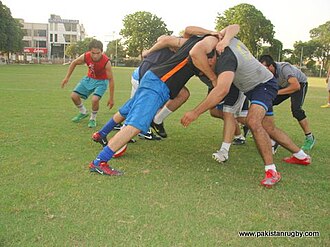
Effective rugby strength training builds the specific physical qualities needed for scrummaging, tackling, and game endurance. The right program combines heavy compound lifts with explosive power work and targeted injury prevention exercises.
Essential Compound Movements for Rugby Power
Rugby strength training emphasizes six fundamental movement patterns that transfer directly to on-field performance:
Squat Pattern: Back squats, front squats, and split squats build leg drive for scrum engagement and tackle power. Perform 3-4 sets of 4-10 reps at 50-85% of your one-rep max (1RM).
Hip-Bend Pattern: Deadlifts, Romanian deadlifts, and hip thrusts develop posterior chain strength for rucking and mauling. These movements target glutes, hamstrings, and lower back muscles essential for rugby contact.
Push Pattern: Bench press, overhead press, and push-ups build upper body strength for ball carrying and defensive positioning. Focus on 3-4 sets of 6-10 reps for optimal strength gains.
Pull Pattern: Pull-ups, rows, and lat pulldowns strengthen the back and arms for tackling and ball retention. Include both vertical and horizontal pulling movements for balanced development.
Twist Pattern: Russian twists, cable rotations, and landmine rotations develop rotational core strength for passing and changing direction under pressure.
Split-Leg Pattern: Bulgarian split squats and lunges improve single-leg stability for running, cutting, and maintaining balance during contact.
Explosive Power Training for Scrum & Tackle Dominance
Power training develops the rapid force production needed for explosive scrum engagement and impactful tackles. Perform these exercises first in your training sessions when you’re fresh:
Power Cleans: Lift 30-60% of your 1RM for maximum 6 reps. This Olympic lift develops full-body explosiveness and coordination essential for scrum engagement and quick direction changes.
Box Jumps: Use boxes 24-36 inches high. Perform 3-4 sets of 5-8 jumps, focusing on maximum height and soft landings. This builds reactive strength for jumping in lineouts and accelerating past defenders.
Medicine Ball Throws: Overhead throws, chest passes, and rotational throws develop upper body power. Use 10-15 pound balls for 3-4 sets of 6-8 throws in each direction.
Hang Cleans: Similar to power cleans but starting from the hang position. Use 40-60% 1RM for 4-6 reps to develop explosive hip extension.
Plyometric Push-Ups: Perform 3-4 sets of 8-10 reps with maximum velocity. These develop upper body power for hand-offs and fend-offs.
Injury Prevention Through Targeted Strength Work
Rugby’s physical demands create specific injury risks that proper strength training can prevent. Focus on these targeted exercises:
Nordic Curls: Perform 3-4 sets of 6-10 reps to strengthen hamstrings eccentrically. This reduces hamstring injury risk by up to 50% according to sports science research.
Single-Leg Romanian Deadlifts: Do 3-4 sets of 8-12 reps per leg to improve balance and strengthen each leg independently. This addresses strength imbalances that can lead to knee and ankle injuries.
Face Pulls: Perform 3-4 sets of 12-15 reps to strengthen shoulder stabilizers and improve posture. This prevents shoulder injuries common in tackling and rucking.
Glute Bridge Variations: Include 3-4 sets of 12-15 reps to activate and strengthen glutes, protecting the lower back and improving hip extension power.
Plank Variations: Hold side planks and front planks for 30-60 seconds to build core stability that protects the spine during contact.
Periodization & Seasonal Training Plans

Rugby strength training must adapt to the competitive season. Periodization ensures you build maximum strength in the off-season while maintaining it during competition.
Pre-Season Strength Building Protocol
The 8-12 week pre-season focuses on building maximum strength and power:
Weeks 1-4: Foundation phase with moderate intensity (65-75% 1RM) and higher volume (4 sets of 8-10 reps). Focus on perfecting technique and building work capacity.
Weeks 5-8: Strength phase with increased intensity (75-85% 1RM) and moderate volume (4 sets of 6-8 reps). Add explosive power work on separate days.
Weeks 9-12: Power phase with high intensity (80-85% 1RM) and lower volume (3-4 sets of 4-6 reps). Combine strength and power work in the same sessions.
Sample Weekly Split:
- Monday: Lower body strength + power
- Tuesday: Upper body strength + power
- Wednesday: Recovery/active rest
- Thursday: Full body power emphasis
- Friday: Conditioning + core work
- Saturday/Sunday: Rest or light skill work
Track progress by testing your 1RM every 4 weeks and recording jump heights or medicine ball throw distances.
In-Season Maintenance Training
During the competitive season, the goal shifts from building strength to maintaining it while managing fatigue:
Training Frequency: 1-2 strength sessions per week, typically Monday and Thursday to allow recovery before weekend games.
Volume and Intensity: Reduce to 2 sets of 4-6 reps at 70-80% 1RM. Focus on maintaining strength rather than building it.
Exercise Selection: Prioritize compound movements and eliminate high-risk or high-fatigue exercises. Replace heavy squats with box squats or safety bar squats.
Recovery Management: Monitor fatigue through vertical jump testing, grip strength, and subjective measures like sleep quality and muscle soreness.
Signs of Overtraining: Watch for decreased performance, persistent fatigue, elevated resting heart rate, and increased injury rates. Reduce training volume if these appear.
Recovery & Adaptation Strategies
Strength gains occur during recovery, not during training. Implement these strategies:
Sleep: Aim for 8-10 hours nightly, with 9-10 hours during intense training phases. Sleep is when muscle repair and hormone production peak.
Nutrition: Consume 1.6-2.2 grams of protein per kilogram of body weight daily. Time protein intake around training sessions for optimal recovery.
Active Recovery: Include light cardio, mobility work, and foam rolling on rest days to promote blood flow and reduce muscle soreness.
Deload Weeks: Every 4-6 weeks, reduce training volume by 40-50% to allow full recovery and adaptation.
Game Schedule Adjustment: Reduce strength training volume by 30% during tournament weeks or when playing multiple games in short succession.
Position-Specific Strength Training
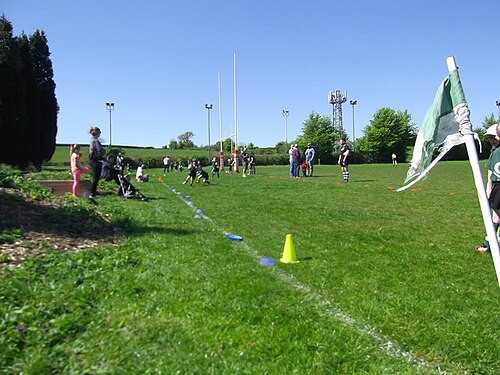
Different rugby positions have unique physical demands. Tailor your strength training to your specific role on the field.
Forwards: Heavy Lifting for Scrum & Ruck Power
Forwards need maximum strength for scrum engagement, rucking, and mauling. Focus on these exercises:
Heavy Squats: Perform 3-5 sets of 3-5 reps at 75-85% 1RM. This builds the leg drive needed for scrum pushing and tackle resistance.
Deadlifts: Use 3-5 sets of 3-5 reps at 80-90% 1RM. This develops posterior chain strength for rucking and ball carrying through contact.
Bench Press: Complete 3-5 sets of 4-6 reps at 75-85% 1RM. This builds upper body strength for ball retention and defensive positioning.
Weighted Carries: Farmer’s walks and yoke carries for 3-4 sets of 30-60 seconds develop grip strength and core stability for ball carrying.
Thick Bar Work: Use fat grip attachments for rows and curls to improve grip strength for ball retention in contact situations.
Backs: Explosive Training for Speed & Agility
Backs need explosive power for acceleration, change of direction, and evasion. Focus on these exercises:
Power Cleans: Perform 3-4 sets of 3-6 reps at 40-60% 1RM. This develops the explosive hip extension needed for sprinting and jumping.
Hang Cleans: Use 3-4 sets of 4-6 reps at 50-65% 1RM to improve second-pull explosiveness for acceleration.
Box Jumps: Complete 3-4 sets of 6-8 jumps using boxes 24-36 inches high. This builds reactive strength for quick direction changes.
Resisted Sprints: Use resistance bands or sleds for 10-20 meter sprints. Perform 6-8 sets with full recovery between efforts.
The biggest mistake rugby players make is treating strength training as optional rather than essential. Players who periodize their training properly see 40% better performance improvements than those who train randomly. Start with this 8-week pre-season program to build the foundation that will make you dominant on the field.
For more information about rugby training and conditioning, visit our comprehensive guide on Bangkok 10s Rugby where you’ll find additional resources for rugby players at all levels.
