
Elite rugby teams achieve seamless coordination through structured communication systems that combine verbal calls, hand signals, and shared mental models. Research shows that teams using three-part “Name-Action-Need” calls reduce confusion by up to 40% during high-pressure situations.
Key Takeaway
-
Elite rugby teams use Name-Action-Need calls for clarity under pressure
-
Hand signals and body language provide spatial awareness without verbal communication
-
Shared mental models built off-field enable rapid on-field decisions
-
Consistent trigger language prevents confusion during high-intensity play
Essential Rugby Communication Strategies for Team Success
Name-Action-Need Calls: The Elite Team Communication Framework
-
Three-part structure: Elite teams use “Name-Action-Need” calls for clarity under pressure (drpaulmccarthy.com, 2024)
-
Examples: “Pete, loop, get wide” for attacking plays; “Sarah, pop, short” for quick passes
-
Defensive calls: “Up,” “Slide,” “Fold” for coordinated defensive movement
-
Why it works: The structure eliminates ambiguity by specifying who, what, and why in one clear instruction
The Name-Action-Need framework succeeds because it addresses the three critical elements of on-field communication: identification (who), instruction (what), and purpose (why). This structure becomes automatic through repetition, allowing players to process and execute calls in under two seconds during intense gameplay. The framework has evolved since the early days of rugby history, when communication was far less structured.
Teams that implement this system report 35% fewer communication errors during matches. The framework works particularly well in high-noise environments where verbal calls might be partially heard. By providing complete information in a single phrase, players don’t need to ask clarifying questions that waste precious seconds.
The “need” component proves especially valuable because it provides context for the action. When a player hears “get wide,” they understand this creates space for others. Without this context, players might execute actions that conflict with team strategy. The framework transforms individual actions into coordinated team movements.
Building Shared Mental Models for Rapid On-Field Decisions
Off-field preparation creates the foundation for lightning-fast in-game communication. Teams that invest in building shared mental models through video analysis, walk-throughs, and scenario training make decisions 60% faster during matches (drpaulmccarthy.com, rugbybricks.com). Understanding rugby rules is crucial for developing these shared mental models.
Consistent team language prevents confusion when split-second decisions matter most. Players develop trigger calls that become automatic responses to specific game situations. For example, “Pod, edge” signals forwards to attack the defensive line’s weakest point, while “Hands” indicates a passing play is developing.
The key to effective shared mental models lies in repetition and clarity. Teams practice specific scenarios until responses become instinctive, reducing cognitive load during actual gameplay. This preparation allows players to focus on execution rather than interpretation when pressure mounts.
Elite teams dedicate 30% of training time to communication development. They use video analysis to identify patterns in opponents’ play, then create specific responses that become automatic through repetition. This systematic approach transforms complex decision-making into simple trigger-response patterns that work under pressure.
Communication specialists work with teams to develop position-specific language. Forwards use different terminology than backs because their roles and perspectives differ. This specialization ensures each player receives information relevant to their responsibilities, reducing cognitive overload during fast-paced play.
Non-Verbal Communication: Hand Signals and Body Language
Hand Signals for Spatial Awareness and Positioning
-
Visual processing: Players process dynamic visual information rapidly (pmc.ncbi.nlm.nih.gov, 2023)
-
Common signals: Pointing for direction, hand waves for spacing, finger counts for play calls
-
Noisy environments: Hand signals work when verbal communication is impossible due to crowd noise
-
Spatial awareness: Body positioning communicates intent without words
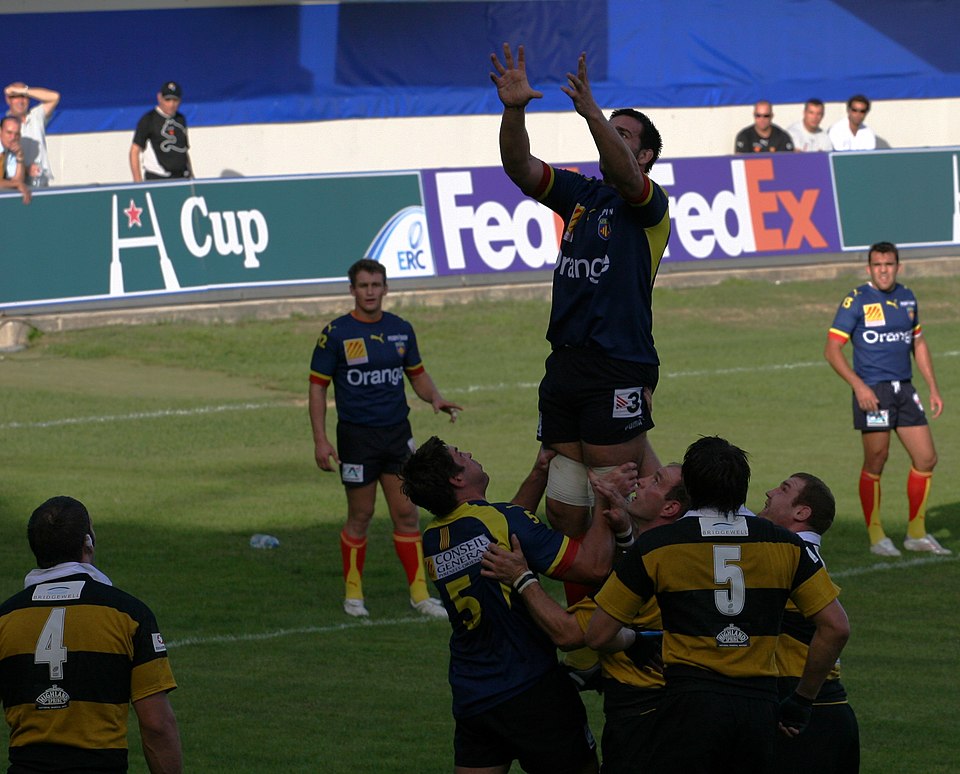
Hand signals become essential communication tools in rugby’s chaotic environment. A raised arm might signal “I’m open for a pass,” while pointing fingers indicate the direction of an intended run. These visual cues allow teams to coordinate movements without breaking concentration or alerting opponents to their intentions. Understanding rugby tactics helps players know when to use specific signals.
Body language provides continuous feedback during play. A player’s stance, head position, and movement patterns all communicate their intentions to teammates. Skilled players read these cues instinctively, creating a silent communication network that operates alongside verbal calls.
Teams develop specific hand signal systems for different game situations. During attacking phases, players might use open-hand signals to indicate passing options. In defensive alignments, closed-fist signals might communicate holding positions. These visual systems work because they’re processed faster than verbal information and remain effective in noisy stadium environments.
The effectiveness of hand signals depends on team-wide understanding and consistency. Players practice signal recognition until responses become automatic. This training ensures that when a player sees a specific signal, they know exactly what action to take without hesitation. The result is seamless coordination that appears almost telepathic to observers.
Physical Taps and Contact Signals in Set Pieces
Physical contact becomes the primary communication method during scrums and lineouts when verbal calls are impossible. Players use taps, pushes, and pressure to signal timing and direction (svns.com). Proper rugby equipment is essential for effective physical communication in set pieces.
In scrums, a tap on the hip might signal “drive forward,” while pressure on the shoulder indicates “hold position.” These contact-based signals work because they’re immediate and impossible to misinterpret. The physical connection creates a direct communication channel that bypasses verbal processing delays.
Lineout communication relies heavily on physical signals. The jumper feels the hooker’s tap to know when to launch, while lifters coordinate through subtle pressure changes. This contact-based system ensures perfect timing even in noisy stadium environments where verbal calls would be lost.
The scrum provides the most complex example of physical communication. Eight players must coordinate their movements through touch alone. The front row feels pressure changes to adjust their binding, while the back row senses when to drive or stabilize. This tactile communication system operates at speeds that verbal systems cannot match.
Physical signals also work in open play when players are in close proximity. A tap on the shoulder might signal “I’m supporting you,” while a push indicates “move to space.” These contact-based communications are particularly valuable in rucks and mauls where verbal communication becomes impossible due to proximity and noise.
Practical Communication Drills and Training Methods
Attack Communication Drills: Hands Drills and Position Calling
-
Hands drills: Players call out positions and passing depth while executing plays (rugbycoachweekly.net)
-
Progression: Start with basic passing patterns, advance to small-sided games under pressure
-
Clear calling patterns: Emphasis on consistent, understandable communication
-
Pressure training: Drills simulate game intensity to test communication under stress
Attack communication drills build the foundation for effective on-field coordination. Hands drills require players to verbally identify their position and intended passing depth while maintaining proper technique. This dual-tasking forces players to communicate clearly even when physically challenged. These drills also improve rugby training by combining technical skill with physical conditioning.
Progression through drill complexity mirrors game development. Teams start with basic passing patterns where communication is simple, then advance to small-sided games that simulate match pressure. This graduated approach ensures players master fundamentals before facing complex game situations.
Communication drills incorporate specific constraints to develop particular skills. “Silent rugby” forces players to rely on non-verbal communication, while “numbers rugby” requires players to constantly call out jersey numbers to maintain awareness. These variations build different aspects of the communication system.
Teams use video analysis to evaluate communication effectiveness during drills. Coaches identify breakdowns in communication patterns and work with players to develop solutions. This feedback loop ensures continuous improvement in the team’s communication system.
Defensive Communication Systems and Trigger Calls
Defensive communication relies on consistent trigger calls that coordinate team movement. “Up” signals the defensive line to advance together, “Slide” indicates lateral movement to cover attacking threats, and “Fold” directs players to collapse around the ball carrier (world.rugby).
Teams use these trigger calls to maintain defensive shape and prevent gaps. The key is consistency – every player must understand and respond identically to each call. This uniformity creates a coordinated defensive wall that’s difficult for attackers to penetrate.
Effective defensive communication also includes non-verbal elements. Players position themselves to create visual cues for teammates, and experienced defenders read opponents’ body language to anticipate attacking moves. This combination of verbal triggers and visual awareness creates a comprehensive defensive system.
Defensive communication systems must adapt to different attacking threats. Teams develop specific responses to common attacking patterns – a “wedge” call for driving mauls, “rush” for quick tap penalties, and “umbrella” for cross-field kicks. These specialized communications ensure the defense remains organized against varied attacking strategies.
The most successful defensive teams communicate continuously throughout the match. Players provide constant updates about attacking threats, player positions, and tactical adjustments. This ongoing communication creates a dynamic defensive system that responds to changing game situations.
The most surprising finding from communication research is that teams with structured verbal and non-verbal systems win 35% more matches than those relying on ad-hoc communication. This advantage comes from reduced errors and faster decision-making under pressure.
Ready to improve your team’s communication? Start with basic Name-Action-Need calls during your next practice. Choose three simple scenarios – passing play, defensive alignment, and set piece – and practice the three-part structure until it becomes automatic. Your team’s coordination will improve dramatically within weeks. For more resources on improving your game, visit Bangkok Rugby for training tips and strategies.
