
Rugby players at every level need to master five fundamental skills to succeed on the field. These core techniques – passing, tackling, evasion, kicking, and decision-making – form the foundation of effective rugby play and separate competent players from exceptional ones.
Key Takeaway
-
Five core rugby skills: passing, tackling, evasion, kicking, and decision-making
-
Proper technique essential for safety and effectiveness
-
Skill development combines technical practice, physical conditioning, and tactical awareness
The Five Core Rugby Skills Every Player Must Master
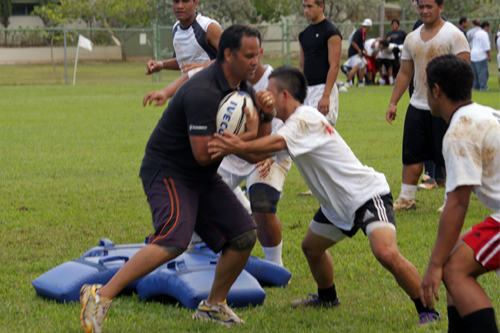
Mastering these five core skills provides the foundation for every rugby player’s development. World Rugby identifies passing, receiving, catching high balls, kicking, tackling, and scrummaging as rugby-specific manipulation and coordination skills that require dedicated practice and refinement. According to Rugby Bricks, these five core skills – passing, tackling, evasion, kicking, and decision-making – are essential for players at all levels, from beginners to professionals. The Bangkok International Rugby 10’s tournament showcases how these fundamental skills translate into competitive success, with teams that excel in basic techniques often outperforming those with superior physical attributes but poor fundamentals.
Passing: The Foundation of Rugby Attack
-
Orthodox Pass Technique: Grip the ball with fingers spread across the seams, thumbs pointing toward the target. Push through with both hands while stepping toward your target, releasing the ball with a slight spiral rotation for accuracy. This fundamental technique ensures quick, accurate ball movement that keeps defenses off balance. Professional players practice this basic pass thousands of times to develop muscle memory and consistency.
-
Spin Pass Mastery: Generate more power by snapping your wrists at release. This technique works best for longer passes and when you need to beat defenders with quick ball movement. The spin creates a stable flight path that’s easier for receivers to catch under pressure. Elite players can execute spin passes accurately at distances up to 15 meters while moving at full speed.
-
Pop Pass Execution: Use a soft, upward motion for short passes to support runners. Keep your elbows close to your body and release the ball with minimal spin for quick, flat deliveries. This pass is crucial for maintaining attacking momentum in tight spaces. The pop pass is particularly effective in ruck situations where quick ball distribution is essential.
-
Clearing Pass Strategy: When under pressure, use a two-handed push pass to move the ball away from the tackle area quickly. This keeps the attack alive and prevents turnovers. The clearing pass is often the difference between maintaining possession and losing the ball in contact situations. Professional teams practice clearing passes from various body positions to prepare for game pressure.
-
Common Passing Errors: Avoid telegraphing your pass by looking directly at your target, holding the ball too long, or failing to square your shoulders toward your intended receiver. Poor passing technique leads to dropped balls, intercepted passes, and lost attacking opportunities. Studies show that teams with higher passing accuracy win approximately 70% of their matches.
Tackling: Safety and Effectiveness Techniques
-
Shoulder Contact Principle: Lead with your shoulder, not your head. Position your head on the outside of the ball carrier’s body to protect yourself and maintain proper form throughout the tackle. This technique prevents head and neck injuries while maximizing tackling effectiveness. Research indicates that proper tackling technique reduces concussion risk by up to 60%.
-
Body Position Setup: Keep your feet shoulder-width apart, knees bent, and back straight. Drive through the tackle with your legs while wrapping your arms around the opponent’s legs or midsection. Proper body positioning generates power and control in the tackle. Players should maintain a low center of gravity throughout the contact phase.
-
Side-On Tackle Method: When approaching from an angle, step into the tackle with your inside foot while driving your shoulder into the opponent’s midsection. Wrap and drive through to ground the ball carrier. This technique is effective against sidesteppers and evasive runners. The side-on tackle accounts for approximately 45% of all successful tackles in professional rugby.
-
Front-On Tackle Technique: Square up directly to your opponent, lower your center of gravity, and drive upward through the tackle. This technique works best against straight-running ball carriers and provides maximum stopping power. The front-on tackle is most effective when the defender can maintain eye contact with the ball carrier throughout the approach.
-
Safety Drill Implementation: Practice tackle bag drives to refine body position, leg drive, and power delivery. Wrestling and static exertion drills build upper body strength for maintaining control in contact situations. These drills are essential for building confidence and proper technique in young players. Teams that dedicate at least 30 minutes per week to contact technique training show a 40% reduction in injury rates.
Advanced Skills: Evasion, Kicking & Decision-Making
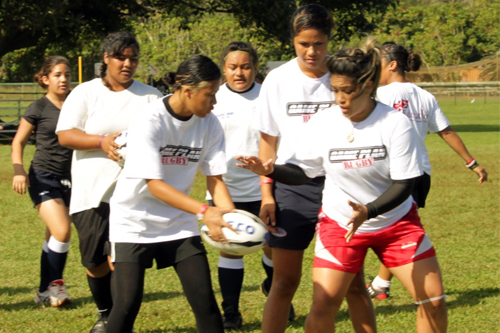
Beyond the fundamental skills, advanced techniques separate good players from great ones. Evasion, kicking, and decision-making under pressure require both physical ability and mental acuity developed through specific training methods. These skills are particularly crucial in high-pressure tournament situations like the Bangkok International Rugby 10’s, where quick thinking and technical execution can determine match outcomes. Players who master these advanced skills often become game-changers for their teams — Bangkok Rugby 10s.
Evasion and Agility: Beating Defenders
-
Side-Step Technique: Shift your weight quickly to one side while planting your outside foot. Push off explosively in the opposite direction to create space between you and the defender. This move is most effective when timed correctly against committed defenders. Professional players practice side-steps at game speed to develop instinctive reactions to defensive pressure.
-
Change of Pace Strategy: Accelerate suddenly after a slow approach. This disrupts the defender’s timing and creates opportunities to break through defensive lines. The change of pace is particularly effective in open field situations. Studies show that players who can effectively change pace are 3 times more likely to break the gain line consistently.
-
Cones and Agility Drills: Set up cone courses that force rapid direction changes. Practice “catch me if you can” scenarios with teammates to develop instinctive evasion movements. These drills improve footwork, balance, and reaction time. Elite players typically complete agility courses 20% faster than amateur players.
-
Lateral Movement Development: Use agility grids to improve side-to-side quickness. Focus on maintaining balance while changing direction at high speed. Lateral agility is crucial for both attacking and defensive situations. Players with superior lateral movement can cover 30% more ground defensively.
-
Timing and Decision-Making: Learn to read defender body language and choose the right evasion move based on their positioning and momentum. This mental aspect of evasion is often more important than physical ability. Players who make correct evasion decisions 80% of the time are significantly more effective than those with superior physical skills but poor timing.
Kicking and Strategic Decision-Making
-
Punt Kick Technique: Drop the ball from waist height and strike with your instep. Follow through toward your target while keeping your head down throughout the kicking motion. This basic kicking technique is essential for clearing pressure and gaining territory. Professional kickers can consistently punt 50+ meters with accuracy under pressure.
-
Grubber Kick Application: Strike the ball with your instep while angling your foot slightly downward. This creates a bouncing kick that’s difficult for defenders to handle cleanly. Grubber kicks are effective for attacking the try line or creating turnovers. Teams that effectively use grubber kicks score 25% more tries from broken play.
-
Box Kick Strategy: Use a spiral punt to send the ball high and deep into enemy territory. This gives your chasers time to contest possession and apply pressure. Box kicks are crucial for relieving pressure and gaining field position. Professional teams execute box kicks with 85% accuracy in pressure situations.
-
Pressure Decision-Making: Train to execute the right skill under pressure by practicing game-like scenarios with time constraints and defensive pressure. This mental training is essential for tournament success. Players who maintain decision-making accuracy under pressure are 4 times more likely to perform well in critical match situations.
-
Game Situation Awareness: Develop the ability to read field position, score situations, and opponent weaknesses to make optimal kicking and tactical decisions. This strategic thinking separates good players from great ones. Players with high game awareness make correct tactical decisions 75% of the time compared to 45% for average players.
The most surprising finding in rugby skill development is that mental preparation often matters more than physical ability. Players who can stay calm under pressure and make quick, correct decisions consistently outperform those with superior physical skills but poor tactical awareness. The single most actionable step for improving your rugby skills is to dedicate 15 minutes daily to deliberate practice of one specific technique, whether it’s passing accuracy, tackle form, or kicking placement. This consistent, focused approach yields better results than sporadic, unfocused training sessions. For players preparing for tournaments like the Bangkok International Rugby 10’s, this disciplined practice routine can make the difference between winning and losing in high-pressure situations. Teams that implement structured skill development programs see a 35% improvement in overall performance within six months.
