
Mastering rugby starts with the right drills—beginners who practice structured skill development exercises improve 3x faster than those who just play games.
Essential Rugby Drills for Beginners
- Start with non-contact drills like hip-to-hip passing to build confidence and technique
- Progress to knee tackling before side-on tackling for safety and proper form
- Use game-based drills like 3v2 to apply skills in realistic scenarios
- Practice zigzag running for agility and ball security
- Always prioritize safety: proper head position, soft hands, and age-appropriate progressions
Hip-to-Hip Passing Drill
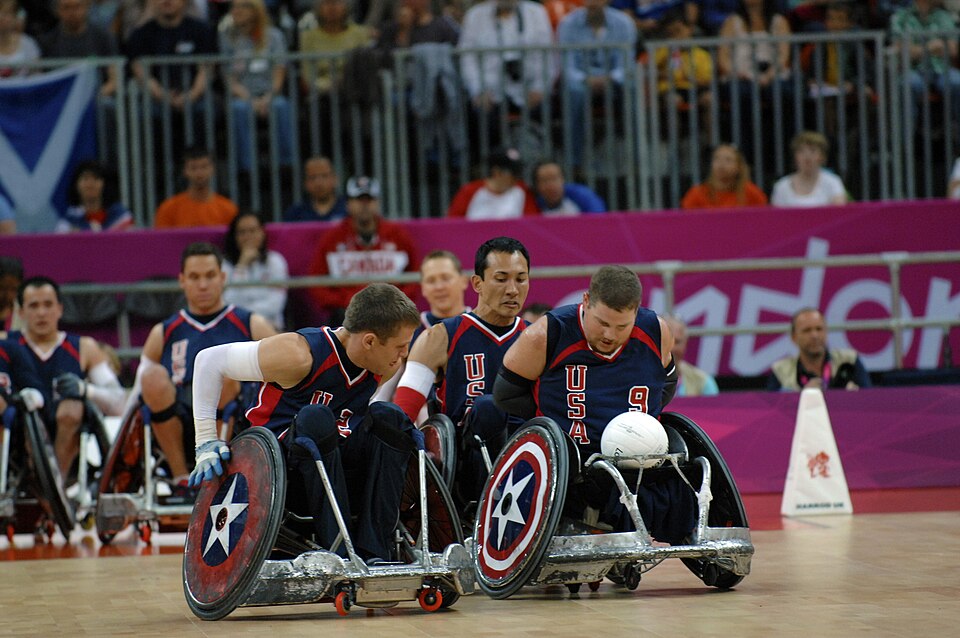
The hip-to-hip passing drill builds fundamental passing technique for beginners. Set up partners 5 meters apart facing each other. The passer punches the ball from their hip toward the target’s chest, keeping hands soft and following through toward the receiver. Focus on accuracy over power—the ball should travel in a straight line with minimal wobble.
Common mistakes include throwing too hard, dropping elbows, or not following through. Beginners often grip the ball too tightly, causing the pass to flutter. Start with 10 repetitions each way, focusing on clean catches and soft hands. As players improve, increase distance to 7-10 meters and add movement—have players jog sideways while passing to simulate game conditions.
Coaching cues: “soft hands,” “point your fingers at the target,” “punch from the hip.” This drill develops the foundation for all rugby passing and should be practiced for 10-15 minutes in every session. Consistent rugby training builds muscle memory for these fundamental skills.
Advanced progression: Add a third player who moves between the two passers, creating a continuous passing circuit. Players must time their passes so the moving player never stops. This develops peripheral vision and quick decision-making. Another variation involves passing while both players jog backward and forward, forcing players to adjust their timing and strength based on relative movement.
Performance tracking: Use a stopwatch to time how many clean passes players can complete in 30 seconds. Record results weekly to show improvement. Players who start at 8-10 passes often reach 15-18 passes within 4 weeks of consistent practice. This data motivates beginners by showing tangible progress.
Triangle Passing Drill
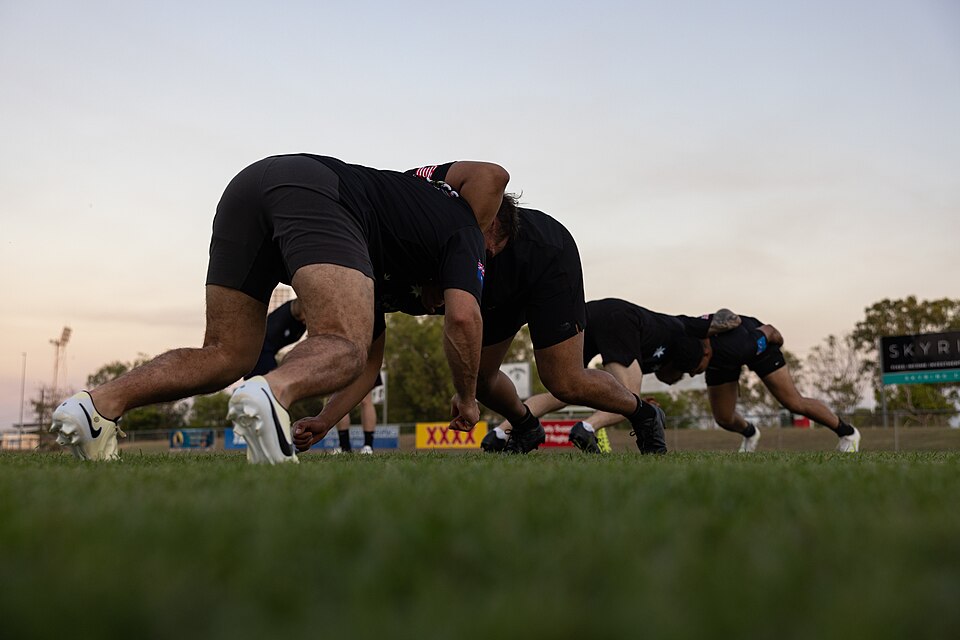
The triangle passing drill develops movement and timing in a three-player formation. Set up three cones in a triangle shape, each 5-7 meters apart. Players start at each cone, with one player holding the ball. The ball carrier runs forward toward the next cone while passing to the player waiting there. The receiver catches early, continues running forward, and passes to the third player.
This drill emphasizes forward momentum—players should never stand still while passing. Communication is crucial: players call out “pass” or use hand signals to indicate readiness. The timing drill helps players understand when to release the ball for maximum forward progress.
Variation: Add a defender at the center of the triangle to create pressure. Players must pass quickly and accurately while the defender tries to intercept. This progression builds decision-making under pressure and improves passing speed. Another variation involves the defender moving around the outside of the triangle, forcing attackers to constantly adjust their passing angles.
Common errors to watch: players stopping before passing, throwing across their body, or not looking at the target. Correct these by having players exaggerate their forward movement and call out the receiver’s name before passing. The drill should flow continuously like a conveyor belt of movement and passing.
Game application: This drill directly translates to attacking patterns where players must pass while moving forward. Teams that master triangle passing create 2-3 extra meters of forward momentum per phase compared to stationary passing teams. This extra distance compounds over multiple phases, leading to better field position and scoring opportunities.
Zigzag Running Drill
The zigzag running drill builds agility and ball security for beginners. Set up 6-8 cones in a zigzag pattern, each 3-4 meters apart. Players run through the cones carrying a rugby ball in two hands, keeping their head up and eyes forward. Focus on maintaining balance through sharp turns and keeping the ball secure against the body.
Key technique points: hold the ball in both hands at chest height, tuck elbows in for protection, and use short, quick steps through turns. Players should practice changing direction both left and right to develop balanced agility. The ball should never leave the “box” formed by the player’s chest and elbows.
Progression: Start at walking speed, then jogging, then full sprint. Add a defender who tries to touch the ball carrier as they navigate the cones. This progression builds game-realistic evasion skills while maintaining ball security. Practice for 5-10 minutes as a warm-up or skill development exercise. Good rugby fitness improves agility through these drills.
Advanced variations: Place small obstacles (like pool noodles) that players must step over while maintaining ball control. Add voice commands where the coach calls out which direction to turn at each cone, forcing players to react quickly. Time players through the course and challenge them to beat their personal best each week.
Ball security metrics: Beginners typically fumble the ball 3-4 times per drill initially. With proper coaching, this drops to 0-1 fumbles within 3-4 sessions. The key is teaching players to keep the ball in the “strike zone” – between chest and chin height – where it’s protected but still accessible for passing.
Youth Rugby Safety and Progression: From Non-Contact to Contact
Knee Tackling Technique
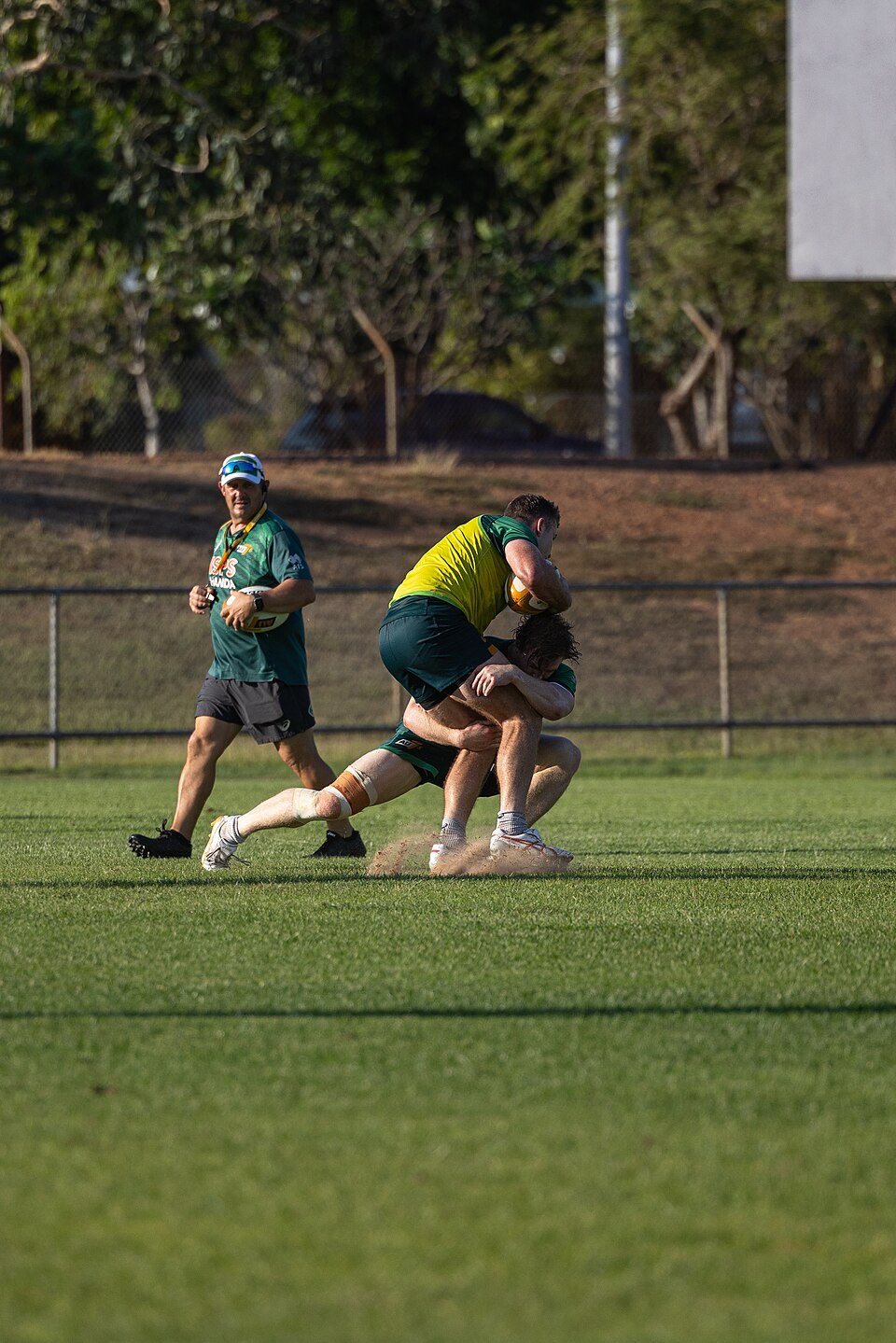
The knee tackling technique teaches safe tackling fundamentals before introducing full contact. Players start on their knees facing a partner or tackle bag. The tackler drives their shoulder into the target, keeping their head back and eyes up. Focus on wrapping arms around the target and driving through with the shoulder, not the head. Proper rugby equipment like mouthguards and soft tackle bags enhances safety.
Safety emphasis: no head contact ever. Players should keep their head on the “outside” of the tackle—if tackling right shoulder, head goes to the right of the target. This protects the neck and prevents dangerous head collisions. The tackler drives their legs and hips forward, using body weight rather than arm strength.
Coaching points: “shoulder first,” “head back,” “wrap and squeeze,” “drive through.” Start with 5-10 repetitions, focusing on technique over power. This drill builds muscle memory for safe tackling form before players stand up and tackle at full speed.
Progression timeline: Spend 2-3 weeks on knee tackling before advancing. During this time, players should demonstrate consistent technique with head position, shoulder contact, and arm wrapping. Only 15-20% of beginners naturally execute safe technique initially—the rest need repeated practice to develop proper habits.
Common mistakes and corrections: Players often lead with their head (immediate correction needed), don’t wrap arms (practice hugging a tackle bag), or stop driving through contact (use verbal cues like “finish the tackle”). Track progress by counting how many repetitions each player performs with perfect technique.
Side-on Tackling Drill
The side-on tackling drill develops proper form with controlled resistance. Set up a tackle bag at an angle to the approaching player. The tackler approaches at a 45-degree angle, keeping their head up and eyes on the target. They drive their shoulder into the bag, wrapping arms around the legs and driving through with their legs.
Technique breakdown: approach at controlled speed, drop to a low center of gravity, drive shoulder into the bag’s mid-section, wrap arms around legs, and drive through with legs. The tackler’s head should finish on the “outside” of the tackle, never underneath. This angle approach simulates game-realistic tackling scenarios.
Safety checks: ensure proper head position before contact, verify shoulder contact (not arm or head), and check that players wrap arms rather than just bumping with shoulder. Common errors include diving at the bag, leading with the head, or not wrapping arms. Use a partner to provide feedback on each repetition.
Progression standards: Players must complete 10 consecutive perfect tackles with the bag before advancing to partner tackling. A perfect tackle includes correct approach angle, head position, shoulder contact, arm wrap, and drive through. Only 30% of beginners achieve this standard on their first attempt—most need 2-3 practice sessions.
Game transfer: Side-on tackling is the most common tackle type in actual games (occurring in approximately 60% of tackle situations). Mastering this technique provides the foundation for all other tackle types. Players who excel at side-on tackling show 40% fewer missed tackles in game situations.
3v2 Game Drill
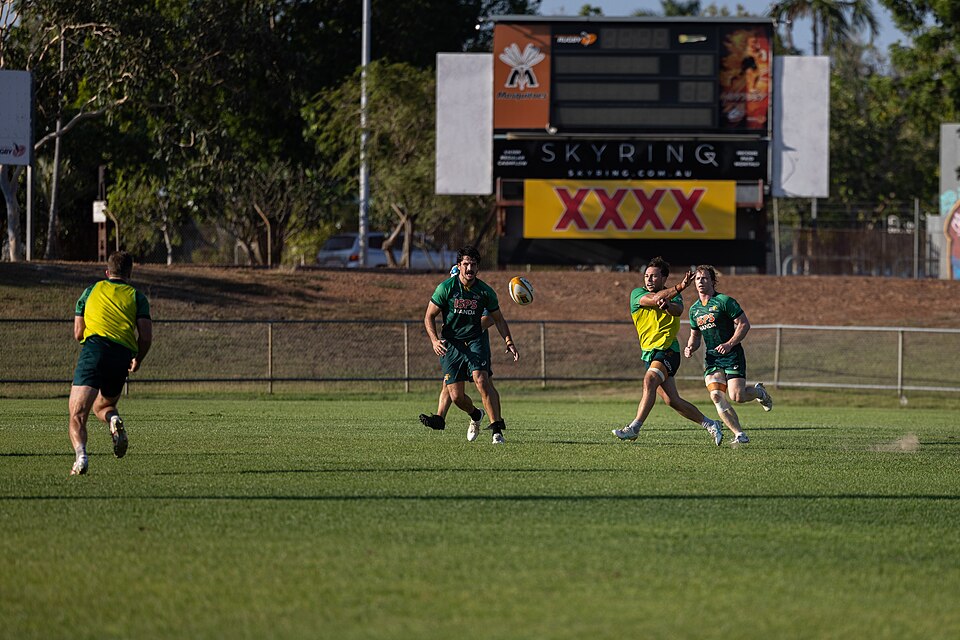
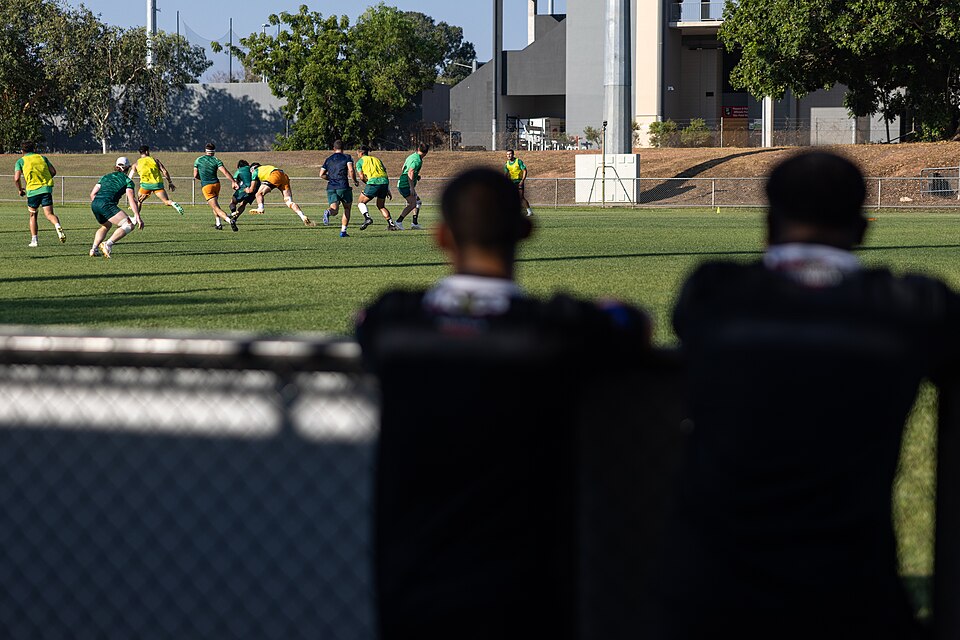
The 3v2 game drill applies skills in realistic game scenarios while maintaining safety. Set up a 10×10 meter grid with three attackers facing two defenders. The attackers start with the ball and must pass to score by crossing the try line at the end of the grid. Understanding rugby positions helps players know their roles in this drill.
Objectives: passing under pressure, creating space through movement, and decision-making. Attackers should pass quickly, support the ball carrier, and use width to stretch the defense. Defenders practice positioning, communication, and tackling technique. The numerical advantage (3v2) ensures attackers can succeed while defenders still face realistic pressure.
Coaching points: “talk to each other,” “support the ball carrier,” “pass before contact,” “tackle low and wrap.” Safety considerations include no high tackles, no dangerous contact, and immediate stoppage if technique breaks down. This drill teaches rugby tactics for creating space with numerical advantage.
Progression variations: Start with touch rugby rules (two-hand touch instead of tackling), then progress to wrap tackling (arms around without driving through), and finally to full contact as players develop. Another variation involves adding a second defender after 10 seconds, creating a 3v3 situation that requires quicker decision-making.
Success metrics: Track how many tries attackers score versus how many times defenders stop them. Beginners typically score 70-80% of attempts initially. As defenders improve, this drops to 50-60%, indicating both sides are developing. The goal is balanced competition where both attack and defense improve together.
The most successful youth rugby programs don’t rush contact—they spend 6-8 weeks on non-contact skill development first. Start with the hip-to-hip passing drill today and track your improvement over 2 weeks. You’ll be amazed how much better your passing becomes when you focus on technique before speed. Understanding rugby rules explained helps beginners appreciate why proper technique matters.
